

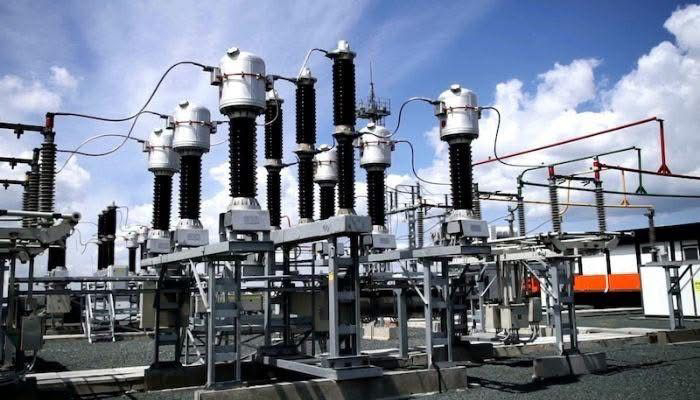
President Bola Tinubu has approved a ₦3.3 trillion payment plan aimed at clearing long-standing debts in Nigeria’s power sector, in what the Federal Government described as a major step towards restoring liquidity, improving electricity generation and delivering more reliable power supply to homes and businesses across the country.
The approval, announced in a State House statement issued on Sunday by the Special Adviser to the President on Information and Strategy, Bayo Onanuga, is under the Presidential Power Sector Financial Reforms Programme, an intervention designed to resolve legacy liabilities that have weighed down the Nigerian Electricity Supply Industry (NESI) for over a decade.
According to the Presidency, the debts accumulated between February 2015 and March 2025. After a final verification and review process, the Federal Government and stakeholders agreed on ₦3.3 trillion as a full and final settlement figure, which officials said would provide a fair, transparent and credible closure to the protracted debt overhang.
The government said implementation has already commenced, with 15 power plants signing settlement agreements worth ₦2.3 trillion. It added that ₦501 billion has already been raised to support the first phase of payments, while ₦223 billion has so far been disbursed, with additional payments now being processed.
Industry observers say the move is expected to strengthen liquidity across the power value chain, especially for generation companies and gas suppliers whose operations have long been hampered by mounting receivables and delayed payments.
Speaking on the development, the Special Adviser to the President on Energy, Olu Arowolo-Verheijen, said the intervention goes beyond debt repayment and is fundamentally about rebuilding confidence in the electricity market.
She said the programme is meant to ensure that gas suppliers are paid, power plants remain operational and the overall electricity system begins to function more reliably, while also complementing other reforms such as improved metering and service-based tariffs tied to quality of supply.
According to her, the Federal Government is also prioritising power delivery to businesses, industries and small enterprises, stressing that stable electricity is critical to job creation, productivity and economic growth.
The latest approval marks a continuation of a broader power sector rescue strategy already set in motion by the Tinubu administration. In October 2025, the Federal Government announced a ₦4 trillion debt reduction framework for the sector, while in December 2025 and January 2026, it moved ahead with bond issuances through Nigerian Bulk Electricity Trading (NBET) to finance the first phase of settlements. Official records show the inaugural ₦501 billion bond under the programme was fully subscribed, reflecting strong investor appetite for the reform effort.
The Presidency believes that by settling the legacy debts, generation output will become more stable, investor confidence will improve and the sector will be better positioned to attract fresh capital for expansion and service delivery.
President Tinubu, according to the statement, also commended all stakeholders involved in resolving the long-standing issues and confirmed that the next phase of the intervention, known as Series II, will commence this quarter.
Analysts say while the debt settlement could ease one of the sector’s most stubborn structural bottlenecks, the ultimate impact on ordinary Nigerians will depend on whether the liquidity injection translates into stronger generation, better transmission stability, improved distribution performance and accelerated metering nationwide.
For many electricity consumers, the test will be simple: whether the latest intervention finally leads to fewer blackouts and more reliable power after years of chronic supply disruptions.

