

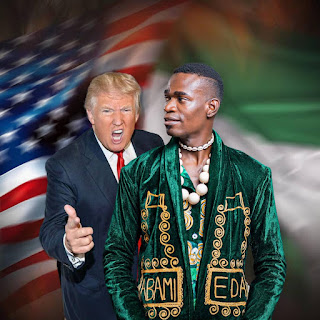

A Nigerian activist and youth leader, Eniola Adio Isadele, has written a strongly worded open letter to the President of the United States, Donald J. Trump, calling for direct American intervention in what he described as the failed union and ongoing genocides in Nigeria.
In the letter titled *“An Unwanted Union Always Brings Mass Rapes: A Letter of Peculiar Concern on the Genocides in Nigeria,”* Isadele accused the Nigerian government of perpetuating a system that sustains ethnic domination, state-sponsored violence, and suppression of dissent. He argued that Nigeria’s creation in 1914 by British colonial authorities under Lord Lugard was a forced amalgamation that has brought nothing but bloodshed and betrayal.
According to him, the amalgamation of the Northern and Southern protectorates was never based on the consent of the people but rather on the colonial interests of Britain. He noted that despite over a century of existence and sixty-five years of independence, Nigeria remains plagued by insecurity, ethnic mistrust, and underdevelopment, which he attributed to a deeply flawed foundation.
The activist referenced President Trump’s earlier comments in which he reportedly described Nigeria as a disgraced country of particular concern. He stated that the declaration was not an insult but a reality check long overdue, adding that the statement resonated with millions of Nigerians who have lost faith in the country’s unity.
He further accused sections of Nigeria’s ruling class, particularly the Fulani elite, of sustaining a hidden agenda to impose Sharia rule across the country, while southern politicians follow blindly for selfish gain. Isadele noted that voices of self-determination have been brutally suppressed, citing the continued detention of the Indigenous People of Biafra leader despite multiple court orders, and the exile of Yoruba Nation agitator Chief Sunday Adeyemo, also known as Sunday Igboho, after alleged threats to his life.
Isadele proposed a four-point plan for resolving Nigeria’s deep-rooted crisis, urging the United States and the international community to compel the Nigerian government to organize a referendum that will allow its ethnic nationalities to decide whether to remain in or withdraw from the union, ensure international oversight of the process through credible global bodies to prevent manipulation, support leadership transition by assisting in the formation of transitional governments led by credible professionals especially from the diaspora should disintegration occur, and mobilize the diaspora by encouraging Nigerian professionals abroad to contribute to rebuilding new independent nations that could emerge from the process.
The people have suffered enough, he wrote. The forced union has failed and it is time to let each nation determine its path to peace and prosperity.
Isadele, who signed the letter as the Convener of The Concern Awakened New Generation Youth (CANG-Youth), stressed that his call was not born out of hatred but from a desire for justice, equity, and true freedom for all Nigerians. He said the continued existence of the country in its current form would only lead to further instability and loss of lives.
The amalgamation has become a curse, not a blessing, he wrote. If the United States truly stands for democracy and human rights, it must help Nigeria confront the truth of its existence. Only a genuine referendum supervised by the international community can prevent further bloodshed.
The letter, which has been circulating widely on social media and among diaspora groups, has triggered a wave of conversations across political and civil society circles. While some commentators hailed Isadele’s courage for speaking out on what many consider a taboo subject, others dismissed the call as impractical and potentially destabilizing.
Political analysts, however, note that the growing frustration among young Nigerians reflects deep-seated disillusionment with governance and the perceived imbalance in the federation. Many argue that Isadele’s letter underscores a growing internationalization of Nigeria’s domestic discontent.

