

I have read with considerable interest the response by Comrade Olufemi Lawson to Wándé T. Àjàyí’s article, “Why Should the South Defend a Governor Who Is Wasting Its Slot?”
Let me state from the outset that I have no quarrel with the right of anyone to defend Governor Lucky Aiyedatiwa. In a democracy, governments deserve commendation when they perform, just as they must be constructively criticised when they fall short of public expectations.
My concern, however, is that the defence offered by Comrade Lawson appears to answer a question that was not really asked.
Nobody said Governor Aiyedatiwa is Governor of Ondo South alone. Nobody said every government project must be located in the Southern Senatorial District. Nobody is advocating sectional governance.
The question is much simpler:
After almost two years in office, has Governor Aiyedatiwa done enough for the Southern Senatorial District, particularly against the background of the district’s longstanding developmental deficits and the expectations that naturally accompanied the emergence of a Governor from the South?
That question deserves an honest answer,not political gymnastics.
There is a tendency in political arguments to dismiss every demand from Ondo South as “sectionalism.”
That is unfair.
Ondo South has historically suffered developmental deficits that can not be wished away by invoking the principle of statewide governance.
Those of us who grew up in Ikale remember what the Ore–Okitipupa road looked like in the late 1990s. We remember the dreaded “Denge-Denge” experience and the hardship commuters endured on that road.
When Dr. Olusegun Agagu became Governor, he did not hide behind the argument that the road was a federal responsibility. He understood that governance sometimes requires courage beyond bureaucratic excuses.
He reconstructed the road.
That is leadership.
Today, after the road again deteriorated badly, it took considerable public pressure before meaningful attention was drawn to the Ore–Okitipupa axis.
And ironically, the road happens to lead to the Governor’s Senatorial District and country home.
Should the people have waited for political pressure before a road of such economic importance received serious attention?
That is the question.
I could produce a long list of challenges confronting Ondo South, but I will restrict myself to an issue in which I have direct knowledge and personal experience: Olusegun Agagu University of Science and Technology, Okitipupa (OAUSTECH).
In 2024, I personally led some union leaders to the Governor’s office.
Our demands were neither unreasonable nor political.
We appealed for increased subvention for OAUSTECH and government intervention in completing some of the university’s abandoned and uncompleted projects.
These were not projects conceived by Governor Aiyedatiwa.
Many of them were inherited projects.
Indeed, Governor Akeredolu had already demonstrated what could be achieved with political will. Out of twelve inherited uncompleted buildings whose foundations dated back to the Agagu era, his administration completed eight.
He also constructed the Engineering Workshop and commenced Phase A of the university’s internal road network.
Therefore, when we approached Governor Aiyedatiwa, we were not asking him to start from scratch.
We were asking him to finish what remained.
Among our specific concerns were the completion of the OSOPADEC hostel and the Faculty of Science building, alongside improved funding for the university.
At the March 2024 convocation ceremony, Governor Aiyedatiwa openly promised a ₦1.2 billion intervention for the university.
As of today, that promised intervention has not been released.
This is not hearsay.
I was part of the engagement.
I witnessed the request.
I heard the promise.
And I have watched the promise remain unfulfilled.
The question then becomes unavoidable:
If interventions could be made in Rufus Giwa Polytechnic, Adekunle Ajasin University, and the University of Medical Sciences, why has OAUSTECH not received the level of intervention that was publicly promised?
Is it unreasonable for people from the senatorial district to ask?
Is it political to ask why the institution established to provide technological and scientific education in the Southern Senatorial District continues to struggle with infrastructure and funding?
Is it hatred of the Governor to ask that his government’s promise be fulfilled?
Certainly not.
Accountability is not hatred.
Criticism is not betrayal.
Demanding performance is not abuse.
I agree completely that Governor Aiyedatiwa is Governor of all Ondo State.
But there is another dimension that can not simply be wished away
.
When a Governor emerges from a region that has complained for years about developmental marginalisation, there is a legitimate expectation that his administration will confront some of those longstanding challenges with urgency.
That expectation is not a demand for preferential treatment.
It is a demand that the Governor understands the problems of his people and uses the enormous authority of his office to address them.
And there are plenty of problems waiting for attention.
Ayetoro is crying for help.
Akinfosile deserves attention.
The Omotosho axis requires serious intervention.
The state of the major healthcare infrastructure serving the Southern Senatorial District should concern every responsible government.
The coastal and environmental challenges confronting communities in the district can not be treated as peripheral issues.
The enormous economic potential of the South remains largely underdeveloped.
These are not inventions of opposition politicians.
They are realities confronting ordinary citizens.
This is where I respectfully disagree most strongly with the defence offered by Comrade Lawson.
Mentioning proposed roads, proposed investments, proposed industrial projects, and proposed interventions is important—but proposals are not the same thing as completed projects.
A government can not forever ask citizens to celebrate what it intends to do.
At some point, the people must be able to point to something tangible and say:
“This government did this.”
A $4 billion proposed petrochemical project is encouraging.
A proposed Deep Sea Port is encouraging.
A proposed coastal resort is encouraging.
Plans for industrialisation are welcome.
But until these initiatives translate into actual investments, construction, employment, and economic activity, they remain largely promises and possibilities.
Government should certainly be commended for attracting investment proposals, but citizens are equally entitled to ask when those proposals will become realities.
The difference between a political promise and a development achievement is execution.
The argument that Governor Aiyedatiwa should not be compared with Governors Adefarati, Agagu, Mimiko, and Akeredolu because they spent longer periods in office has some merit—but only to a point.
Nobody is demanding that Governor Aiyedatiwa should have accumulated eight years’ worth of achievements in two years.
But almost two years is enough time to examine direction, priorities, execution and tangible results.
A government does not need eight years to release a promised intervention.
It does not need eight years to increase university subvention.
It does not need eight years to complete a nearly finished building.
It does not need eight years to intervene in a deteriorating road.
It does not need eight years to commence urgent interventions in a struggling hospital.
It certainly does not need eight years to demonstrate that a particular Senatorial District is receiving the attention it deserves.
So, yes, the length of tenure matters.
But what you do with the time available to you matters even more.
Those of us familiar with the history of Ondo South can not discuss development without remembering Dr. Olusegun Agagu.
Whatever one’s political opinion of Agagu may be, history can not erase the infrastructure and institutional foundations established during his administration.
Sadly, some of those legacies suffered neglect after his departure.
Governor Akeredolu subsequently revived some of the university infrastructure inherited from the Agagu era.
That is why expectations are high today.
The people of Ondo South are not asking Governor Aiyedatiwa to reinvent governance.
They are asking him to build on what previous administrations started, complete what is unfinished, and address what has been neglected.
Does Governor Aiyedatiwa hate Southern district?
It would be unfair and politically irresponsible to personalise a developmental debate in that manner.
But perhaps the more appropriate question is:
Does the Governor’s current performance in Ondo South reflect the urgency that the district’s developmental challenges require?
For me, the answer, at this point, is no.
And I say that as someone who personally participated in an engagement with the Governor on one of the most important institutions in the district.
I say it not from hearsay, but from experience.
This is not a declaration that Governor Aiyedatiwa has failed permanently.
Far from it.
He still has an opportunity to change the narrative.
He can release the promised ₦1.2 billion intervention to OAUSTECH.
He can improve the university’s subvention.
He can complete the OSOPADEC hostel and Faculty of Science building.
He can address the deteriorating infrastructure of the Southern Senatorial District.
He can make meaningful interventions in the healthcare sector.
He can confront the Ayetoro environmental crisis with greater urgency.
He can prioritise the Akinfosile and Omotosho axes.
He can strengthen the economic infrastructure necessary to unlock the enormous potential of Ondo South.
And he can do all these without depriving Ondo North or Ondo Central of development.
That is what equitable governance means.
Let me be very clear.
Ondo South does not want a Governor who will abandon the rest of the State.
We do not want a Governor who will govern exclusively for his Senatorial District.
But neither do we want a Governor whose origin from the South becomes irrelevant to the developmental realities of the South.
The people expect more.
They have every right to expect more.
And those expectations should not be mocked as sectionalism.
The South is not asking for favours.
It is asking for fulfilled promises.
It is asking for visible projects.
It is asking for functional institutions.
It is asking for good roads.
It is asking for better healthcare.
It is asking for economic opportunities.
It is asking for development that can be seen, touched, and experienced.
Political narratives will come and go.
Articles will be written.
Supporters will defend.
Opponents will criticise.
But ultimately, none of these will matter as much as the condition of the roads, schools, hospitals, universities, communities, and livelihoods of the people.
Governor Aiyedatiwa should, therefore, not be afraid of criticism.
He should use it as motivation.
If the ₦1.2 billion promised to OAUSTECH is released tomorrow, I will commend him.
If the remaining university projects are completed, I will commend him.
If the roads in Ondo South receive sustained attention, I will commend him.
If the Specialist Hospital is transformed into a truly functional referral centre, I will commend him.
If Ayetoro receives a sustainable intervention, I will commend him.
If the economic potential of Omotosho, Akinfosile, and the wider Southern Senatorial District is unlocked, I will commend him.
That is how responsible citizens should operate.
We should not condemn a government simply because we belong to a different political camp.
But neither should we defend a government simply because the Governor comes from our Senatorial District.
Our loyalty should ultimately be to the people.
And the people have a right to ask hard questions.
After almost two years, those questions are no longer premature.
They are necessary.
The Governor still has time.
He still has the opportunity to finish strong.
But the time for promises to become projects is now.
In the final analysis, governance is not measured by what a government says it will do. It is measured by what the people can point to and say: “This government did this.”
Let the projects speak.
Let the promises be fulfilled.
Let the people decide.
Shalom
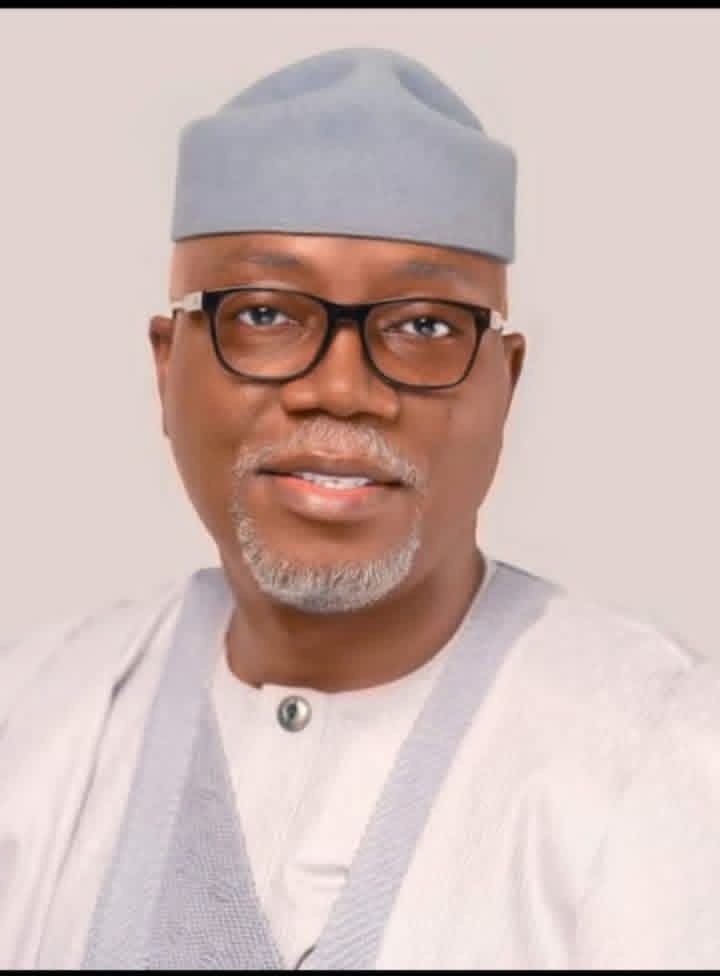
Dayo Temola is Former Chairman of Joint Action Committee of Staff Unions in OAUSTECH

